
Expanding Our Understanding of Adverse Experiences
Feb 27, 2025
When people talk about trauma, they often begin with Adverse Childhood Experiences, or ACEs. This well-known framework helps us understand how early experiences in life can influence long-term health and well-being.
But there’s more to the story. ACEs focus mostly on individual and interpersonal experiences. They describe what happens to someone or within their immediate relationships. What they don’t fully capture are the ways our communities, cultures, history, and environments shape trauma and healing.
When we only consider the individual experience, we can unintentionally reinforce an old narrative: that trauma is a personal problem, and healing rests entirely on individual effort. This overlooks how our broader environments and the systems we interact with influence our nervous systems and overall well-being.
When we limit our perspective this way, we risk putting the responsibility for healing solely on the person who experienced harm, without acknowledging the structural and systemic conditions that contribute to that harm in the first place.
The Broader Realms of ACEs
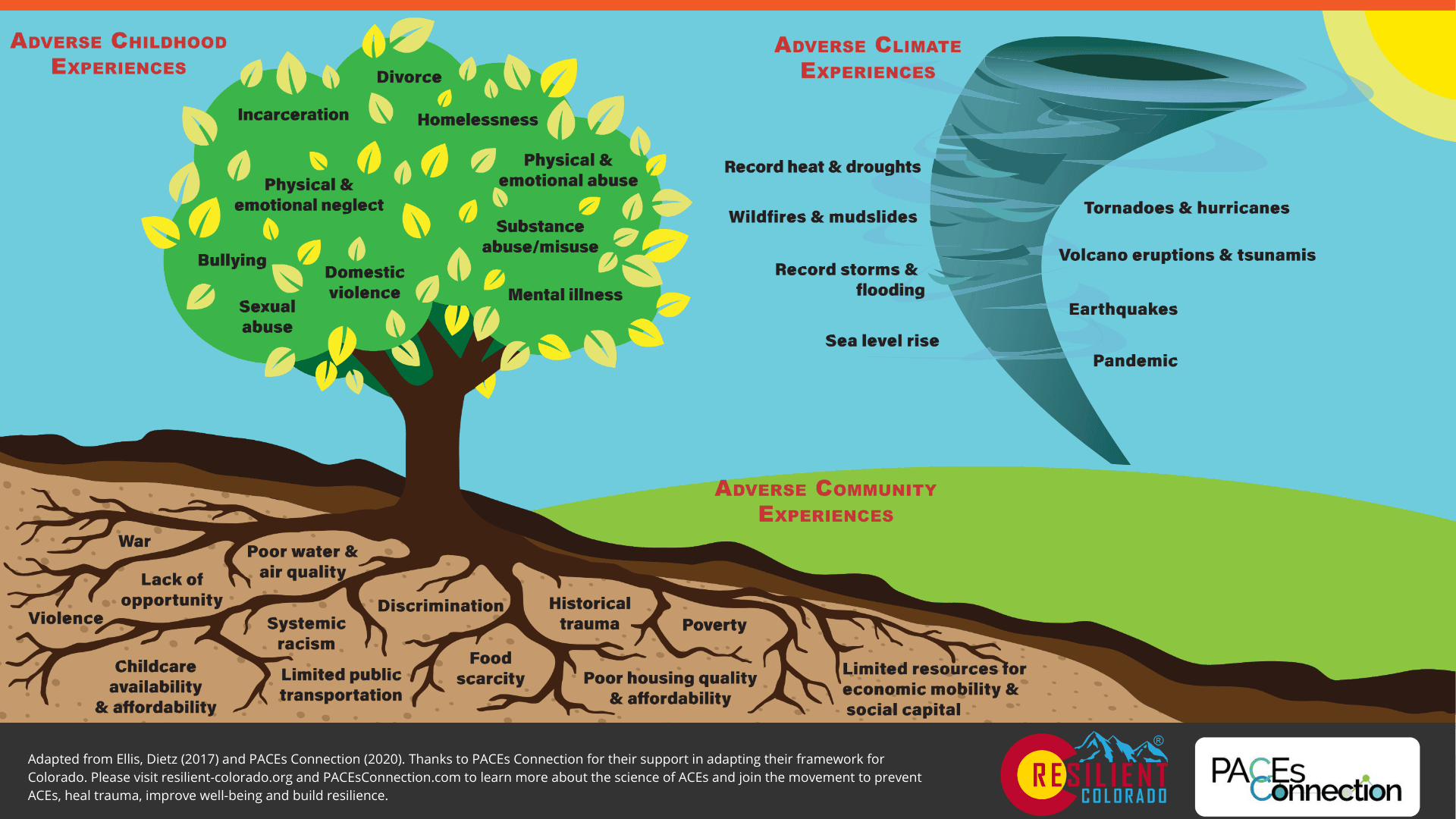
When we expand our lens, we can see and account for the various layers of how we are impacted:
Adverse Community Experiences — community violence, lack of safety, or systemic disinvestment that wear down a community’s sense of security and belonging
Adverse Climate Experiences — environmental instability, displacement, or disasters that create chronic stress and fear
Adverse Cultural/Historical Experiences — the intergenerational trauma of racism, colonization, and oppression embedded in social structures
Each of these affects not only individuals but entire groups of people and the systems that connect them. They remind us that trauma isn’t only what happens to us, but also what happens within us as we navigate the environments around us.
Trauma is complex; it’s both internal and external. Understanding it requires looking beyond individual stories to the contexts that shape them. When we see how community, culture, and climate intersect with personal experience, we can create approaches to healing that are compassionate and collective.